
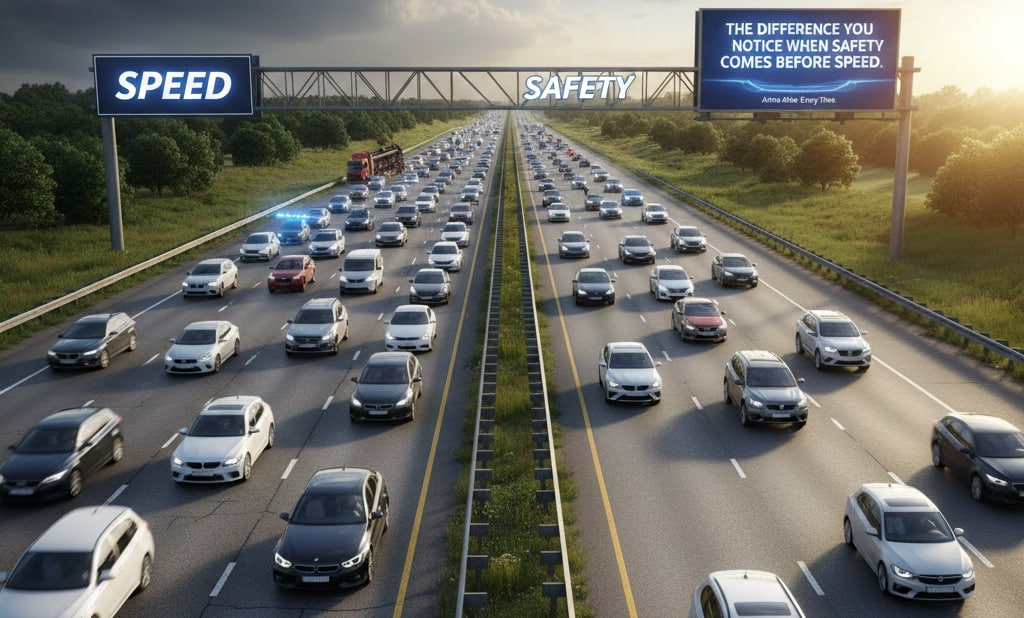
The Difference You Notice When Safety Comes Before Speed becomes clear the moment you experience an environment where caution, preparation, and responsibility take priority over rushing and shortcuts. Whether on the road, in the workplace, in business operations, or in leadership decisions, choosing safety before speed changes outcomes in ways that are both visible and deeply felt. It shapes trust, reduces stress, and creates systems that last.
In a culture that often rewards urgency and rapid results, speed is frequently mistaken for efficiency. Quick deliveries, fast growth, immediate responses, and accelerated performance are celebrated. Yet when speed overrides safety, mistakes multiply. Accidents increase. Stress levels rise. Trust erodes. The true value of prioritizing safety emerges not in dramatic headlines, but in the quiet consistency of operations that run smoothly without crisis.
The Difference You Notice When Safety Comes Before Speed is first evident in reduced tension. In transportation, for example, a driver who prioritizes safety maintains steady control, observes traffic patterns, anticipates hazards, and respects limits. Passengers feel secure. The ride may not be aggressive or rushed, but it is calm and predictable. That predictability creates confidence.
In workplaces, safety-first cultures produce similar effects. Employees who know their well-being matters perform with greater focus and engagement. When companies implement clear safety protocols, provide training, and encourage reporting of hazards, workers feel valued. Productivity improves not because people are pressured to move faster, but because they operate without fear.
Speed-driven environments often ignore warning signs. Small issues are overlooked in the pursuit of deadlines. Over time, these overlooked risks compound. Equipment failures, burnout, and preventable errors become inevitable. By contrast, safety-first systems emphasize inspection, maintenance, and continuous improvement. Problems are addressed early, preventing larger disruptions later.
The Difference You Notice When Safety Comes Before Speed also appears in leadership decisions. Responsible leaders understand that sustainable growth requires stability. Rapid expansion without safeguards can strain resources and compromise quality. Prioritizing safety in decision-making ensures that growth is supported by strong foundations.
Trust is one of the most powerful outcomes of safety-first thinking. Customers, employees, and partners gravitate toward organizations that demonstrate responsibility. In transportation services, clients prefer providers known for careful drivers rather than reckless efficiency. In manufacturing, buyers choose suppliers with strong compliance standards. Trust builds reputation, and reputation supports longevity.
Risk management plays a central role in prioritizing safety. Identifying potential hazards, evaluating impact, and implementing preventive measures reduce uncertainty. While these processes may slow initial progress, they prevent costly setbacks. The Difference You Notice When Safety Comes Before Speed is reflected in fewer emergencies and more predictable outcomes.
Financial performance is also affected. Accidents, lawsuits, recalls, and downtime carry significant costs. Organizations that rush without safeguards often face unexpected financial burdens. Safety investments, though sometimes perceived as expenses, function as protective assets. Over time, they reduce liability and preserve capital.
In project management, safety before speed fosters thorough planning. Teams allocate time for risk assessments, quality checks, and compliance reviews. Deadlines remain important, but not at the expense of integrity. This balanced approach reduces rework and enhances long-term efficiency.
Employee morale improves significantly in safety-focused environments. When workers feel protected, they are more likely to contribute ideas and collaborate openly. A culture that values safety encourages communication. Employees report concerns without fear of retaliation. This transparency strengthens organizational resilience.
The Difference You Notice When Safety Comes Before Speed is equally visible in public infrastructure. Roads designed with clear signage, pedestrian crossings, and traffic calming measures reduce accidents. Construction projects that enforce safety standards protect both workers and communities. The absence of incidents becomes the quiet success story.
In personal habits, prioritizing safety influences daily life. Defensive driving, regular health checkups, careful financial planning, and balanced schedules all reflect the same principle. Rushing through decisions often leads to mistakes. Taking deliberate action reduces regret and builds stability.
Technology further reinforces the importance of safety. Automated systems, monitoring tools, and predictive analytics help detect risks before they escalate. However, technology alone is insufficient without a mindset that values prevention over haste. The Difference You Notice When Safety Comes Before Speed depends on human judgment as much as innovation.
Organizations that adopt safety-first values often experience fewer disruptions during crises. Preparedness plans, emergency protocols, and regular training create readiness. When unexpected events occur, teams respond calmly and effectively. Speed may still be required in emergencies, but it is guided by structured preparation.
Customer experience also improves under safety-focused operations. In hospitality and travel industries, guests feel more comfortable when providers demonstrate attention to detail and precaution. Clean facilities, transparent communication, and adherence to standards reinforce confidence.
The psychological benefits of safety prioritization are significant. Environments that emphasize caution reduce chronic stress. Individuals operate with greater clarity and concentration. Over time, this stability enhances both mental and physical well-being.
The Difference You Notice When Safety Comes Before Speed is not about eliminating ambition or efficiency. It is about redefining them. True efficiency accounts for long-term consequences. Ambition guided by responsibility achieves durable results.
In industries such as healthcare, aviation, and construction, safety protocols are non-negotiable. Strict guidelines exist because the cost of error is too high. These sectors demonstrate that excellence and caution are not opposites. They are partners.
Sustainability also aligns with safety-first thinking. Environmental protection measures may slow certain processes but preserve ecosystems for future generations. Responsible resource management reflects the same principle of prioritizing protection over immediate gain.
Communication plays a vital role in maintaining safety standards. Clear instructions, visible signage, and open dialogue ensure that expectations are understood. When speed dominates, communication often becomes rushed or incomplete, increasing the likelihood of misunderstanding.
Leadership accountability strengthens safety culture. Leaders who model responsible behavior set the tone for their teams. When executives emphasize safety in meetings, performance metrics, and rewards systems, employees recognize its importance.
Over time, the cumulative effect of safety prioritization becomes evident. Fewer accidents. Lower turnover. Stronger relationships. Sustainable growth. These outcomes reflect The Difference You Notice When Safety Comes Before Speed in measurable terms.
Critics sometimes argue that focusing on safety slows progress. However, setbacks caused by negligence are far more disruptive. Recovering from accidents or reputational damage consumes more time and resources than preventive measures ever would.
The concept extends beyond physical safety to ethical responsibility. Transparent practices, compliance with regulations, and fair treatment of stakeholders demonstrate a commitment to integrity. Ethical shortcuts may accelerate short-term gains but undermine long-term trust.
Ultimately, The Difference You Notice When Safety Comes Before Speed is about perspective. It recognizes that progress without protection is fragile. Stability supports advancement. Preparation enables performance.
When safety becomes foundational rather than optional, outcomes change. Systems operate smoothly. People feel secure. Growth becomes sustainable. Speed retains value, but it is guided by structure and foresight.
The quiet confidence that emerges from safe practices is unmistakable. It is present in calm workplaces, reliable services, and consistent performance. The difference is not always loud, but it is powerful. Prioritizing safety before speed creates environments where excellence thrives without unnecessary risk.


Leave a Comment